Single Deck Blackjack: Rules and Practical Playing Tips | 365pk
Learn how a single deck changes blackjack decisions, what to check in the table rules, and how to keep each hand within a budget you can afford. Card-game rules and payouts can vary, so check the table details before playing.
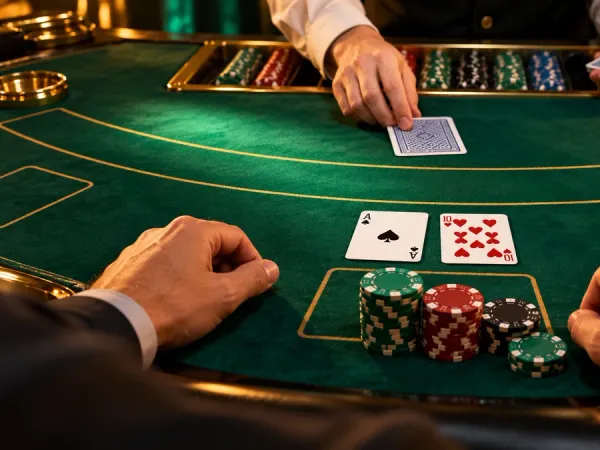
What is Single Deck Blackjack? A 365pk Guide to the Rules
Single Deck Blackjack uses one standard 52-card deck. The aim is to finish closer to 21 than the dealer without going over. A smaller deck changes which cards may remain, but it does not guarantee an advantage or a win. Before joining a table, read its rules for actions, payouts and betting limits.
RTP is a long-run theoretical measure, not a prediction of what you will receive in a session. No specific RTP for 365pk Single Deck Blackjack is established here, so check the game information before you play. Treat any displayed rate as an estimate across many rounds, not a promise about your balance.
The goal is to beat the dealer’s total without exceeding 21. J, Q and K count as 10; an Ace counts as 1 or 11, whichever helps the hand without busting; other cards count at face value.
Key points
A single deck makes the card pool smaller, but the house edge depends on the table rules and your decisions. Use basic strategy as a guide, check the available actions and payout terms, and remember that correct play cannot remove chance or guarantee a return.

Understand the usual blackjack actions, then check the table’s own rules before staking money.
Deal and card values
A typical round gives you and the dealer two cards. The dealer’s card visibility and dealing procedure can vary by table. Face cards count as 10, an Ace as 1 or 11, and number cards at face value.
Hit or Stand
Hit asks for another card; Stand keeps your current total. Going over 21 is a bust. Consider the dealer’s visible card and your own total, and set a stake limit before the hand begins.
Double Down and Split
Some tables let you double your stake for one further card after the first two cards, or split a pair into separate hands. Check the table rules first, as eligibility and any limits may differ.
Insurance and Surrender
Some tables offer Insurance when the dealer shows an Ace, or allow Surrender in specified situations. These options have conditions and affect your stake; check the rules and payout terms before choosing either.
Example hand — Blackjack (Ace + King = 21)
Payout depends on table rules
An Ace and any 10-value card make 21 with the first two cards; check the table’s rules for how this hand is paid.
Common outcomes in blackjack; the actual payout terms depend on the table rules.
Use these points to understand the format and make an informed choice before opening a game.
One standard deck
A single deck contains 52 cards, so fewer cards are in circulation than in a multi-deck game. That changes the card mix, but does not by itself make the house edge lower; table rules and decisions matter too.
RTP varies by game
RTP is useful context for comparing games over the long run, but it cannot predict an individual result. Check the game information for the rate and conditions that apply to the table you choose.
Mobile access
If you open the game on a mobile screen, take a moment to check the card values, available actions and stake before confirming each decision. Do not assume an app download or a particular mobile feature is required.
Review the rules
Read the displayed game rules and payout terms before starting. If a rule is unclear, pause and find an explanation before placing a stake; no particular third-party check or guarantee is established here.
Play at a steady pace
Take time to consider each hand and avoid raising stakes to recover losses. Decide in advance how much you can afford to spend, and stop when you reach that limit.
Promotions and offers
Check the terms of any promotion before opting in, including eligibility, wagering conditions, expiry and game restrictions. Do not treat an offer as cash available to withdraw unless its terms say so.
Use these general decision points as a learning aid. Exact choices can depend on the table rules and the dealer’s visible card.
| Your hand | Dealer shows 2 | Dealer shows 3 | Dealer shows 4–6 | Dealer shows 7–8 | Dealer shows 9 | Dealer shows 10 | Dealer's Ace |
|---|---|---|---|---|---|---|---|
| Hard 8 or lower | Hit | Hit | Hit | Hit | Hit | Hit | Hit |
| Hard 9 | Hit | Double | Double | Hit | Hit | Hit | Hit |
| Hard 10 | Double | Double | Double | Double | Double | Hit | Hit |
| Hard 11 | Double | Double | Double | Double | Double | Double | Hit |
| Hard 12 | Hit | Hit | Stand | Hit | Hit | Hit | Hit |
| Hard 13–16 | Stand | Stand | Stand | Hit | Hit | Hit | Hit |
| Hard 17 or higher | Stand | Stand | Stand | Stand | Stand | Stand | Stand |
| Ace + 7 (soft 18) | Stand | Double; otherwise stand | Double; otherwise stand | Stand | Hit | Hit | Hit |
| A pair of Aces | Split if permitted | Split if permitted | Split if permitted | Split if permitted | Split if permitted | Split if permitted | Split if permitted |
| A pair of 8s | Split if permitted | Split if permitted | Split if permitted | Split if permitted | Split if permitted | Split if permitted | Split if permitted |
Use this strategy chart as a general guide to blackjack decisions; check the table rules before you play. Play responsibly.
Skill level
Basic strategy can help you make more informed choices, but it cannot guarantee a particular house edge or result.

Practical tips
Before choosing a blackjack table, review its rules and make sure you understand the available account and payment options. 365pk lists live casino tables, but a single deck blackjack table is not confirmed here.
Create an account
Use the account registration option on 365pk and read the terms shown during sign-up. Adults only; do not share your login details.
Review payment options
Check the payment methods and any deposit conditions shown in your account before choosing how to fund it. Only use an option available to you.
Choose a game
Explore the games area to see which tables are available. If a single deck blackjack table is listed, review its rules and limits before deciding whether to play.
Play within your limits
Choose a stake you can afford and make each decision with the table rules in mind. Results can vary, so never treat a hand as guaranteed income.
Single deck vs multi-deck blackjack: what should you consider?
The number of decks affects how cards are distributed, but the rules and procedures matter too. If you find a single deck table, read its game information before comparing it with other formats.
A single deck changes the card mix, but it does not by itself establish a particular house edge. Payouts and rules such as dealer behaviour can affect the maths, so avoid relying on figures that are not shown for the table you choose.
With one deck, each card drawn changes what remains in that deck. In practice, online shuffling or dealing procedures may limit how useful card tracking is, so check the game rules rather than assuming a count can guide your next wager.
Stay focused while playing blackjack
Blackjack involves decisions under uncertainty. After a loss, avoid chasing it with a larger stake; pause and return only if you can stick to your planned limit.
A previous hand is not a reliable guide to the next result. Treat every decision on its own merits, and check the game rules for how cards are dealt and shuffled.
Manage your budget
Set a session budget that you can afford to lose, then choose stakes that let you stay within it. No stake-sizing approach prevents losses or guarantees a longer session.
For example, divide your chosen session budget into smaller amounts before you begin. This can make it easier to track spending, but it does not change the game’s odds or protect your balance from loss.
Explore 365pk games
365pk describes Mines games and grid-based tables, including a traditional 5x5 layout. Those details concern Mines; check any blackjack table’s own rules separately.
A brief history of single deck blackjack
Blackjack developed from earlier card games, and its rules have changed across places and periods. The exact origin of the name is debated, so a short guide should not treat one account as certain.
Single deck describes a format using one deck of cards. When comparing available tables, use the rules displayed for each game to understand how dealing and shuffling work.
What to check in a game
Table details
| Detail | What to check |
|---|---|
| Deck count | How many decks the table uses. |
| RTP | Whether the game information states a rate and the conditions behind it. No rate for a 365pk single deck blackjack table is established here. |
| House edge | Whether a figure is provided and which rules and decisions it assumes. |
| Blackjack payout | The payout stated in the table rules; no particular rate is established here. |
| Other outcomes | How ordinary wins, pushes and busts are settled. |
| Insurance | Its eligibility, separate stake and payout. Insurance is a separate wager, not a doubling of the original stake. |
| Dealer action | Whether the dealer hits or stands on soft 17. |
| Player actions | When doubling, splitting or surrendering is permitted. |
| Minimum stake | The minimum shown in the table limits. |
| Maximum stake | The maximum shown in the table limits. |
Answers to common questions about single deck blackjack and what to check if a table is available on 365pk.